
The Workout Does Not Care About Your Shoulder. That Is My Job.

CrossFit builds real strength. It also asks your shoulder to do things at speed, at load and at fatigue that most joints never see. Here is how to keep training without paying for it later.

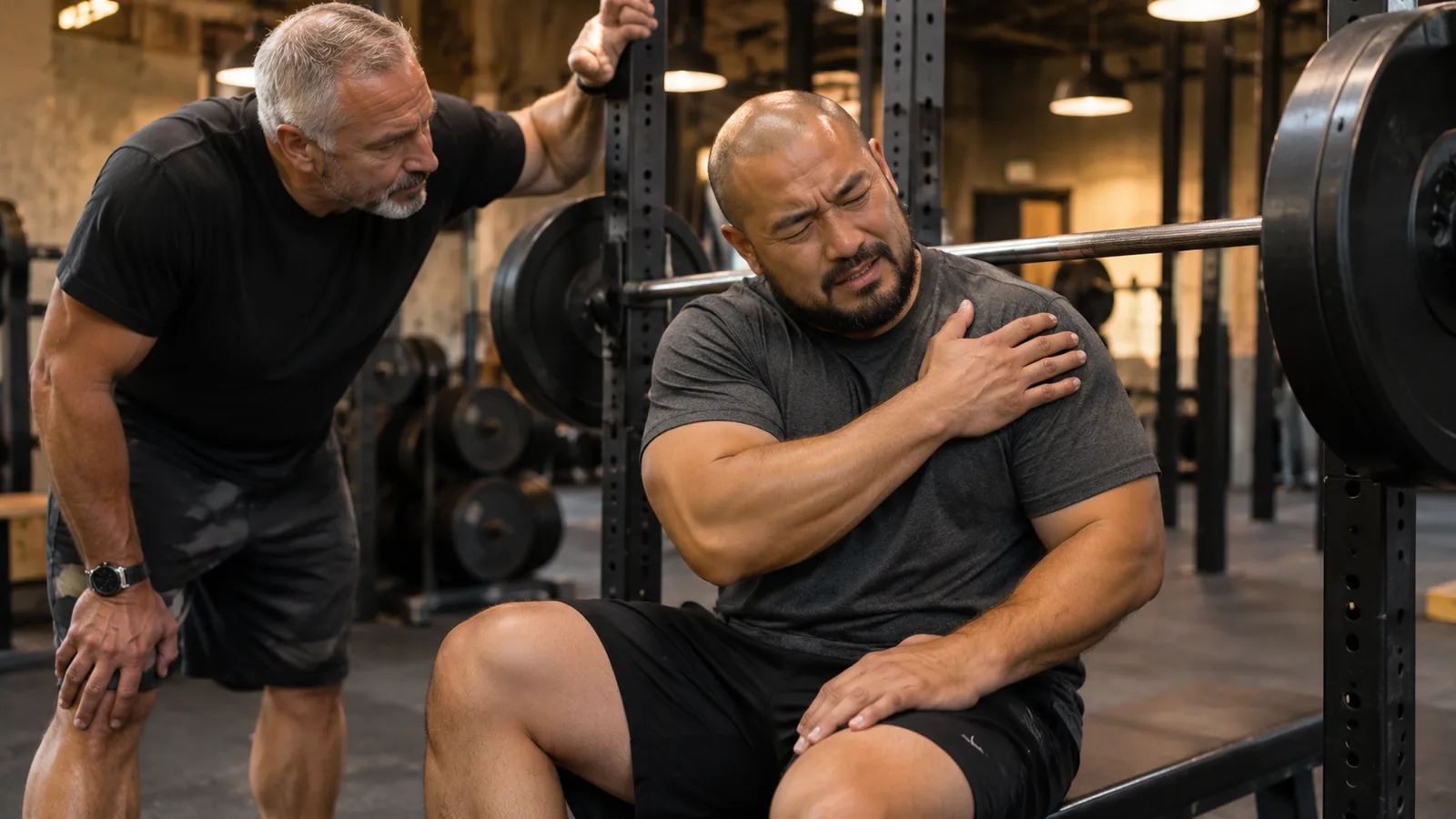
Woman holding her sore shoulder beside a pull-up rig in a CrossFit gym as her coach walks over
"It's just a little pinch at the top of my pull-ups. I'll push through it." I hear some version of that sentence every week, and it is almost always the sentence that comes right before the shoulder gets worse.

I love what CrossFit does for people. I see patients in their thirties, fifties and seventies who are stronger, leaner and more confident than they have ever been, and most of them credit their box. Community, coaching and a reason to show up are powerful medicine.

But I am also a shoulder surgeon, and I see the other side of the whiteboard. The movements that make CrossFit effective are the same ones that load the shoulder at its most vulnerable angles: overhead, rotated and moving fast.

About 25%

of CrossFit-related injuries involve the shoulder, more than in many other sports.

The good news first: overall, CrossFit's injury rate looks comparable to, or lower than, other popular ways of training. The shoulder is simply where the risk concentrates.

Why the Shoulder Takes the Hit

Your shoulder is the most mobile joint in your body, and it pays for that freedom with stability. A shallow socket, a ring of cartilage called the labrum and four small rotator cuff muscles do the work of keeping the ball centered. They are built for control, not for absorbing a swinging bodyweight at the bottom of a pull-up.

Three things in a typical workout raise the stakes:

  • Speed. Kipping pull-ups, kipping handstand push-ups and muscle-ups add momentum. Momentum is efficient for reps and hard on tissue that is not ready for it.
  • Load overhead. Snatches, overhead squats and jerks put a heavy bar over a joint that is working at the edge of its range.
  • Fatigue. Form rarely breaks on rep one. It breaks on rep twenty-eight, when the rotator cuff is tired and the shoulder blade stops doing its share.

What I See Most Often

Rotator cuff irritation and tears. Usually a dull ache on the outside of the shoulder that is worse at night or when reaching overhead. Most start as irritation that responds well to treatment. Ignored, some progress to tears. I describe one of the most common ways that happens in my pickleball article.

Labral tears. Often a deeper pain with clicking, catching or a sense that the shoulder is not quite centered, especially after a kip or a catch in a snatch. My volleyball article explains labral tears in more detail.

Biceps tendon and AC joint pain. Pain at the front or top of the shoulder that flares with dips, ring work and bench-style pressing.

The Signs That Mean Stop and Get It Checked

  • Pain that wakes you up at night
  • Weakness lifting your arm, or a shoulder that suddenly cannot do what it did last week
  • Clicking or catching with pain, or a feeling that the shoulder shifted
  • Pain that lasts more than two weeks even after you scale your workouts

Seen early, most of these problems are treated without surgery: smarter loading, physical therapy, targeted strengthening and time. Waiting is what turns a fixable problem into a surgical one.

How to Keep Training Smart

Earn the kip. Build strict pull-ups and strict presses before adding momentum. If you cannot do several clean strict reps, the kip is borrowing strength you do not have yet.

Scale without ego. Ring rows instead of muscle-ups, strict instead of kipping, lighter instead of sloppy. Scaling is training, not quitting.

Warm up the small muscles. A few minutes of band work for the rotator cuff and shoulder blade before overhead days pays for itself.

Watch your rep twenty-eight. When form goes, the set is over, no matter what the clock says.

When You Do Need Us

At TruOrtho we treat athletes the way they train: with a plan. That starts with a careful exam and, when needed, imaging, then a path back that fits your goals, whether that is a competition or simply a pain-free workout. When surgery is the right answer, we use arthroscopic techniques wherever possible and build the recovery around getting you back to the box safely. You can read more about my training and shoulder work on my TruOrtho page.

If your shoulder has been talking to you, do not wait for it to shout. Request an appointment with Dr. Lynch or call (210) 878-4116.

Sources

Klimek C, Ashbeck C, Brook AJ, Durall C. Are injuries more common with CrossFit training than other forms of exercise? J Sport Rehabil. 2018;27(3):295-299.
American Academy of Orthopaedic Surgeons, AAOS Now: Orthopaedic Injuries in Recreational Sports: How Does CrossFit Compare to Traditional Forms of Exercise? June 2023.


Recent Posts

See All

The Workout Does Not Care About Your Shoulder. That Is My Job.

CrossFit builds real strength. It also asks your shoulder to do things at speed, at load and at fatigue that most joints never see. Here is how to keep training without paying for it later.

Woman holding her sore shoulder beside a pull-up rig in a CrossFit gym as her coach walks over
"It's just a little pinch at the top of my pull-ups. I'll push through it." I hear some version of that sentence every week, and it is almost always the sentence that comes right before the shoulder gets worse.

I love what CrossFit does for people. I see patients in their thirties, fifties and seventies who are stronger, leaner and more confident than they have ever been, and most of them credit their box. Community, coaching and a reason to show up are powerful medicine.

But I am also a shoulder surgeon, and I see the other side of the whiteboard. The movements that make CrossFit effective are the same ones that load the shoulder at its most vulnerable angles: overhead, rotated and moving fast.

About 25%

of CrossFit-related injuries involve the shoulder, more than in many other sports.

The good news first: overall, CrossFit's injury rate looks comparable to, or lower than, other popular ways of training. The shoulder is simply where the risk concentrates.

Why the Shoulder Takes the Hit

Your shoulder is the most mobile joint in your body, and it pays for that freedom with stability. A shallow socket, a ring of cartilage called the labrum and four small rotator cuff muscles do the work of keeping the ball centered. They are built for control, not for absorbing a swinging bodyweight at the bottom of a pull-up.

Three things in a typical workout raise the stakes:

  • Speed. Kipping pull-ups, kipping handstand push-ups and muscle-ups add momentum. Momentum is efficient for reps and hard on tissue that is not ready for it.
  • Load overhead. Snatches, overhead squats and jerks put a heavy bar over a joint that is working at the edge of its range.
  • Fatigue. Form rarely breaks on rep one. It breaks on rep twenty-eight, when the rotator cuff is tired and the shoulder blade stops doing its share.

What I See Most Often

Rotator cuff irritation and tears. Usually a dull ache on the outside of the shoulder that is worse at night or when reaching overhead. Most start as irritation that responds well to treatment. Ignored, some progress to tears. I describe one of the most common ways that happens in my pickleball article.

Labral tears. Often a deeper pain with clicking, catching or a sense that the shoulder is not quite centered, especially after a kip or a catch in a snatch. My volleyball article explains labral tears in more detail.

Biceps tendon and AC joint pain. Pain at the front or top of the shoulder that flares with dips, ring work and bench-style pressing.

The Signs That Mean Stop and Get It Checked

  • Pain that wakes you up at night
  • Weakness lifting your arm, or a shoulder that suddenly cannot do what it did last week
  • Clicking or catching with pain, or a feeling that the shoulder shifted
  • Pain that lasts more than two weeks even after you scale your workouts

Seen early, most of these problems are treated without surgery: smarter loading, physical therapy, targeted strengthening and time. Waiting is what turns a fixable problem into a surgical one.

How to Keep Training Smart

Earn the kip. Build strict pull-ups and strict presses before adding momentum. If you cannot do several clean strict reps, the kip is borrowing strength you do not have yet.

Scale without ego. Ring rows instead of muscle-ups, strict instead of kipping, lighter instead of sloppy. Scaling is training, not quitting.

Warm up the small muscles. A few minutes of band work for the rotator cuff and shoulder blade before overhead days pays for itself.

Watch your rep twenty-eight. When form goes, the set is over, no matter what the clock says.

When You Do Need Us

At TruOrtho we treat athletes the way they train: with a plan. That starts with a careful exam and, when needed, imaging, then a path back that fits your goals, whether that is a competition or simply a pain-free workout. When surgery is the right answer, we use arthroscopic techniques wherever possible and build the recovery around getting you back to the box safely. You can read more about my training and shoulder work on my TruOrtho page.

If your shoulder has been talking to you, do not wait for it to shout. Request an appointment with Dr. Lynch or call (210) 878-4116.

Sources

Klimek C, Ashbeck C, Brook AJ, Durall C. Are injuries more common with CrossFit training than other forms of exercise? J Sport Rehabil. 2018;27(3):295-299.
American Academy of Orthopaedic Surgeons, AAOS Now: Orthopaedic Injuries in Recreational Sports: How Does CrossFit Compare to Traditional Forms of Exercise? June 2023.
Recent Posts

See All