Is Your Young Athlete Training More Hours Than Their Age?
Overuse injuries in young athletes are not bad luck. They follow a pattern, and one of the most useful rules for preventing them fits on a sticky note on your refrigerator.
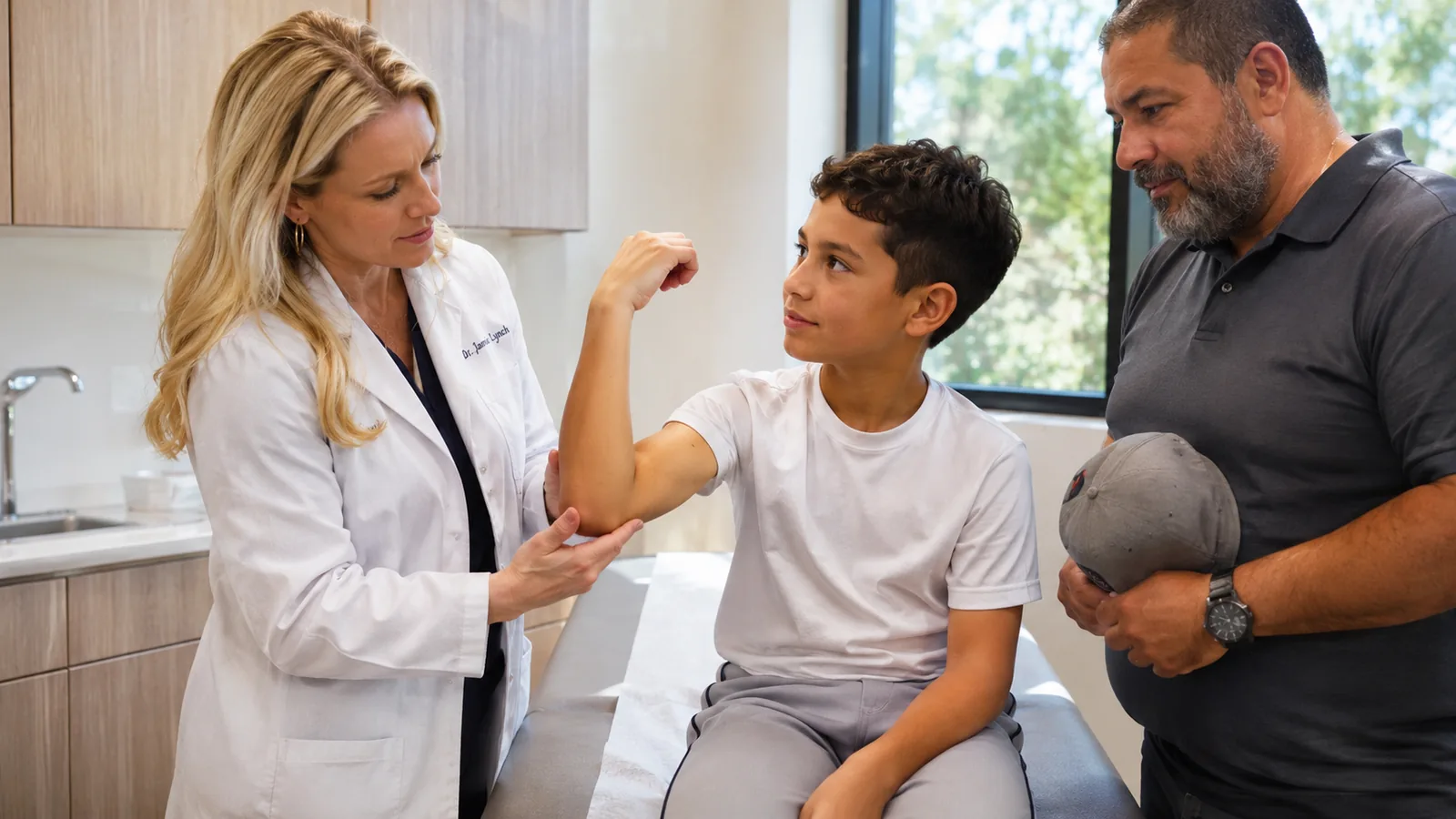
"She's only twelve, but the coach says if she wants a scholarship she has to play year round." I hear some version of that from parents every week, usually while their child is sitting on my exam table with an injury that did not have to happen.
I want to be clear about where I stand. I love youth sports. Kids who play learn grit, teamwork and how to lose with grace, and active kids tend to become active adults. Nothing here is an argument for keeping your child on the couch.
But the youth sports world has changed. Travel teams, private lessons, showcase weekends and fall, spring and summer seasons in the same sport add up fast. Here is the rule I give families, and it comes straight from research on young athletes: your child should not spend more hours per week in organized sports than their age in years. A twelve year old, twelve hours. A fifteen year old, fifteen.
2x
the odds of a serious overuse injury for young athletes who spend more hours a week in organized sports than their age.
The same study found that specializing in one sport raised injury risk on its own, even after accounting for total hours. Kids whose organized sports time was more than double their free play time were also at higher risk.
Kids Are Not Small Adults
Growing bones have growth plates, areas of developing cartilage near the ends of the long bones. They are where the bone lengthens, and they are softer than the ligaments and tendons around them. That changes everything about how kids get hurt.
In an adult, a hard twist might sprain a ligament. In a growing child, the same force can injure the growth plate instead. So a "sprained" wrist, ankle or knee in a child deserves a real look if it is not clearly improving within a few days. Growth plate injuries happen about twice as often in boys as in girls, partly because girls finish growing earlier.
What Overuse Looks Like in Kids
Little League elbow. Pain on the inside of the elbow in young throwers, caused by repeated stress on the growth plate there. This is the one that worries me most, because the same throwing load that strains a twelve year old's elbow can set up ligament trouble years later, the kind that ends in Tommy John surgery.
Little League shoulder. Pain in the upper arm of pitchers, a stress injury of the growth plate at the top of the arm bone.
Knee pain below the kneecap. Often Osgood-Schlatter disease, common in jumping and running sports during growth spurts.
Heel pain. Often Sever's disease, a growth plate irritation at the back of the heel in soccer and basketball players.
Throwing deserves its own warning. In a ten year study of youth pitchers, those who pitched more than 100 innings in a year were 3.5 times more likely to suffer a serious injury. Innings add up quietly when a child plays on two teams.
Teen Girls and the ACL
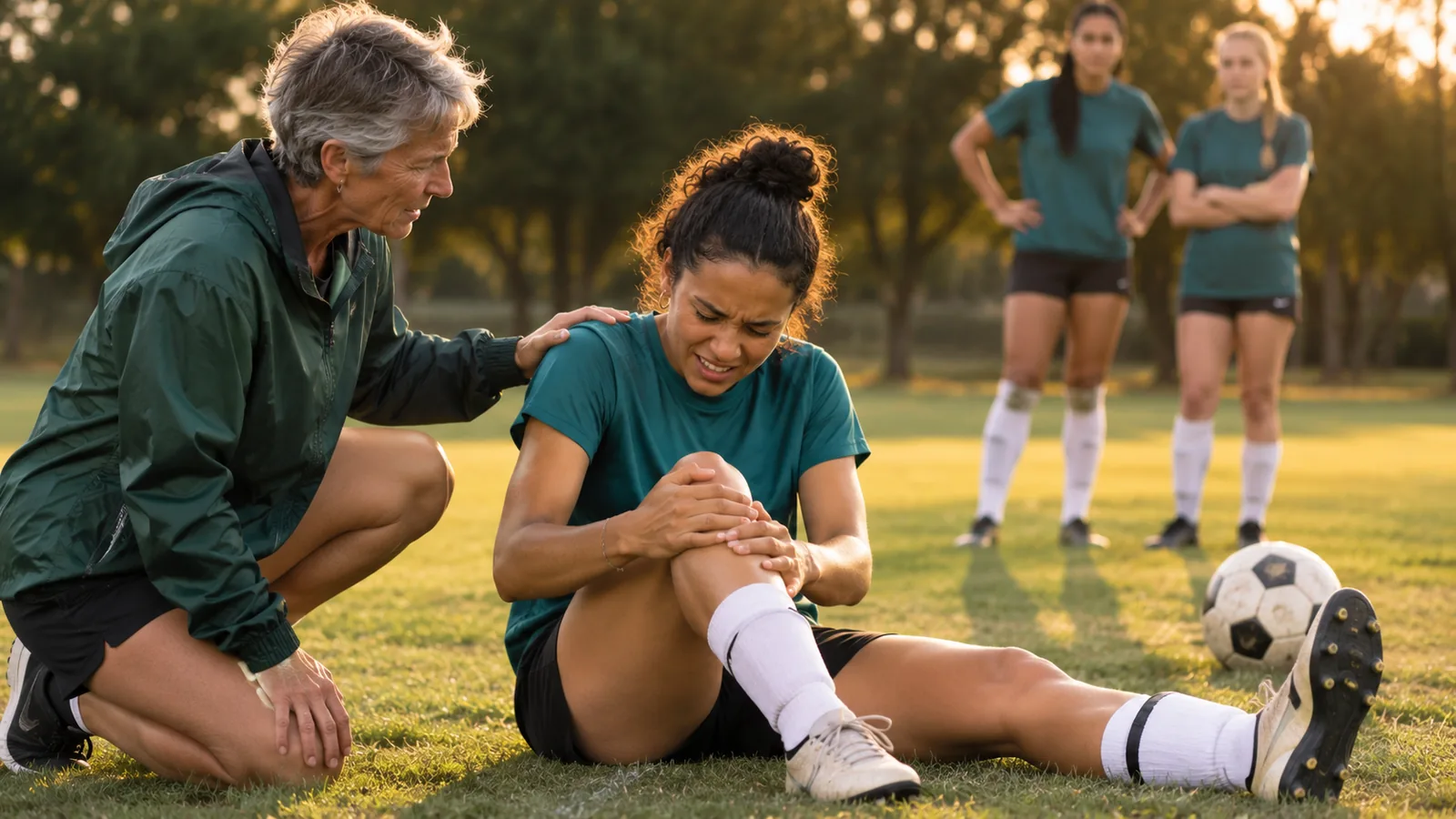
During puberty, many girls grow taller and heavier faster than their hip and hamstring strength can keep up. Landings get stiffer, knees cave inward on cuts, and ACL risk climbs, especially in soccer and basketball. The good news is that a structured warm-up that teaches landing, cutting and balance is one of the most effective tools a team has. I explain how it works in my article on basketball knees and my article on the soccer warm-up.
What I Tell Every Sports Family
- Hours no more than age. Count practices, games, lessons and private training together.
- Play more than one sport. At least through the early teens. Different sports load different joints, and multisport kids often become better athletes.
- Build in real breaks. Plan time away from the main sport every year, not just between seasons that overlap.
- Track every pitch. Follow pitch count limits and rest days, and make sure someone adds up the total when a child throws for more than one team.
- Protect free play. Pickup games and backyard play build athletic skill without the pressure or the repetition.
Pain Is Information
Kids often hide pain because they do not want to lose their spot. Watch for these:
- Pain that changes how they throw, run or jump
- Pain that returns every practice or lingers after rest
- Swelling, or tenderness at one specific spot on a bone
- Any elbow or shoulder pain in a thrower
- A child who suddenly does not want to play
When You Do Need Us
Most overuse injuries in kids heal with rest, rehab and a smarter schedule, and surgery is uncommon. Young bodies heal remarkably well when we give them the chance. At TruOrtho in San Antonio, I take the time to examine young athletes carefully, order imaging only when it changes the plan, and build a return plan the athlete, the parents and the coach can all follow. You can learn more about my background on my TruOrtho page.
If your child's pain is changing how they play, let's look at it now, not after the season. Request an appointment with Dr. Lynch or call (210) 878-4116.
Questions Parents Ask Me
Is it bad for my child to play one sport year round?
Specializing in a single sport raises the risk of overuse injury, even when total hours are similar. Most kids do best sampling several sports through the early teens, with planned breaks from their main one.
How can I tell if it is a growth plate injury?
Often you cannot tell by looking. Pain and tenderness near the end of a bone, close to a joint, in a growing child should be examined, and imaging is sometimes needed.
When do growth plates close?
Growth plates close as children finish growing, during the teenage years, and girls usually finish earlier than boys. Until then, they are the weak link.
Sources
Jayanthi NA, LaBella CR, Fischer D, Pasulka J, Dugas LR. Sports-specialized intensive training and the risk of injury in young athletes: a clinical case-control study. Am J Sports Med. 2015;43(4):794-801.
Fleisig GS, Andrews JR, Cutter GR, et al. Risk of serious injury for young baseball pitchers: a 10-year prospective study. Am J Sports Med. 2011;39(2):253-257.
American Academy of Orthopaedic Surgeons, OrthoInfo: Growth Plate Fractures.