
Felt a Pop on the Bench Press? The Clock Just Started.

A pec tear on the bench press is one of the few lifting injuries where waiting can change your options. Here is what it feels like, why timing matters, and how to keep your shoulders lifting for decades.
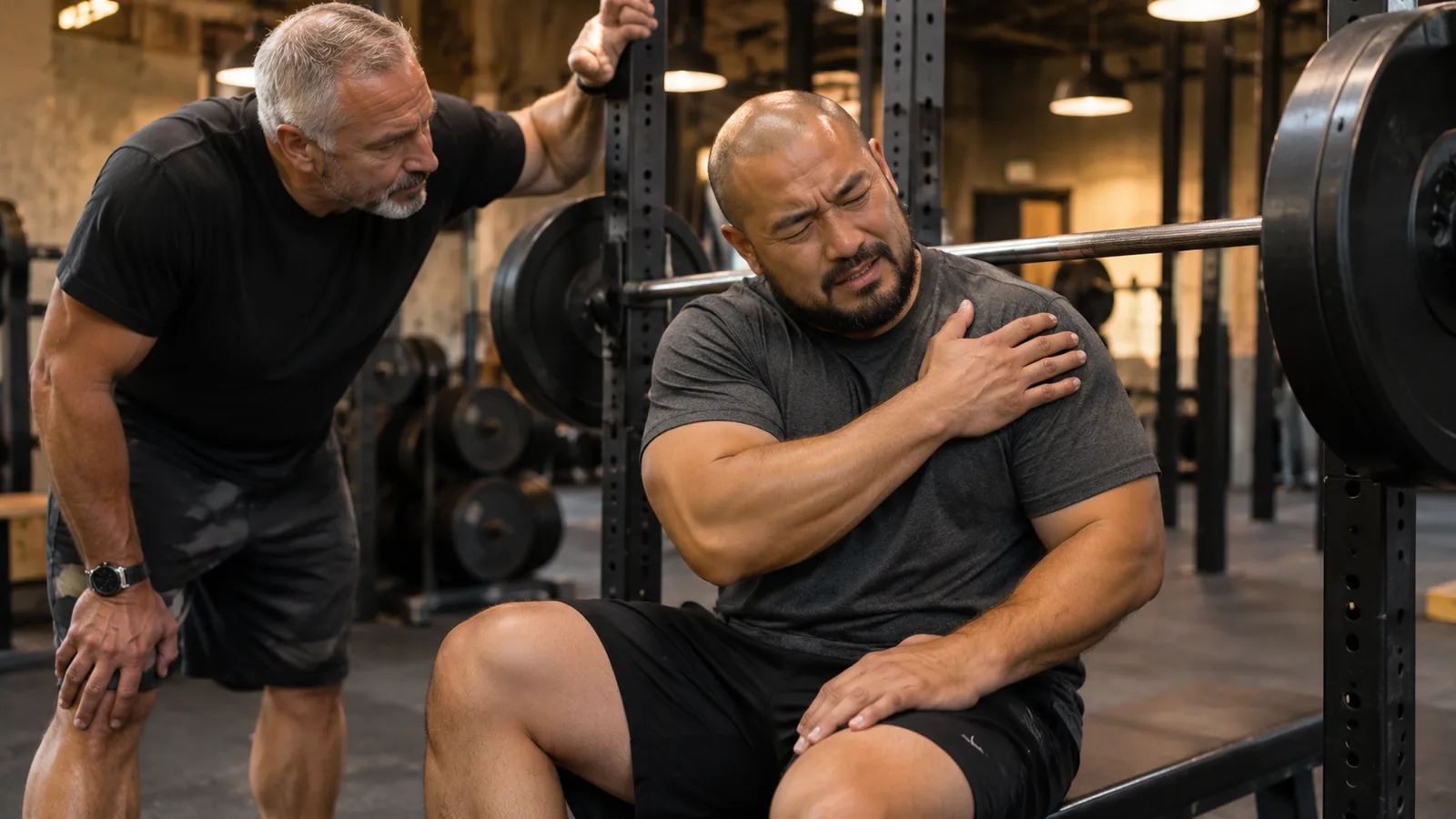
Weightlifter on a bench holding his chest and shoulder after a bench press injury as his training partner checks on him
"It popped at the bottom of my bench, but I figured I'd give it a couple of weeks." I hear that one more often than you would think, and those couple of weeks can be the most expensive rest a lifter ever takes.

Let me start with good news, because lifters hear plenty of the other kind. Weight training sports have relatively low injury rates compared with common team sports. Lifting heavy is not reckless. When problems do show up, they tend to land in the shoulder, lower back, knee, elbow and wrist.

But a few lifting injuries are time sensitive in a way most people never hear about. When a tendon tears completely off the bone, the muscle pulls it away. Every week it sits there, it shortens and scars, and bringing it back gets harder.

48%

of the pectoralis major tears reported in the medical literature happened during weight training.

Three of every four of those cases were reported in the most recent twenty years the review covered, which tracks with how many more people lift today.

What a Torn Pec Feels Like

The pec tendon usually tears near the bottom of a heavy bench press. The bar is close to your chest, your arm is stretched wide, and the muscle is lengthening under a big load. That lowering phase is where tendons are most vulnerable.

Lifters describe a pop or a tearing feeling at the front of the shoulder or armpit, sudden weakness pushing, and then a bruise that spreads down the upper arm over the next few days. The fold of skin at the front of the armpit may look thinner or flatter than the other side, and the chest can look uneven when you squeeze your hands together.

The Clock Starts at the Pop

For an active lifter with a complete tendon tear, surgical repair is often the right answer, and timing is a real factor. A fresh tear can usually be reattached directly. An old one may have pulled back and scarred so far that it needs a tendon graft to bridge the gap. That is a bigger operation with a longer road back.

The same is true at the elbow. A distal biceps tear often happens on a heavy curl, a mixed grip deadlift or catching a weight that is falling. You feel a pop at the front of the elbow, the crease bruises, and the biceps muscle bunches up toward the shoulder. Here, too, repair is generally simpler when it is done early.

That is why "give it a couple of weeks" worries me. Partial tears and muscle strains often heal well on their own. A complete tendon tear does not reattach itself, and the first weeks are when you have the most options.

The Injuries That Sneak Up on You

Lifter's shoulder. Pain on top of the shoulder where the collarbone meets the shoulder blade, the AC joint. Years of heavy bench press, dips and pressing can irritate the end of the collarbone until the bone itself starts to wear away. Its medical name is distal clavicle osteolysis, and it usually calms down with changes to grip, range of motion and training volume.

Labral tears and biceps tendon pain. A deep ache at the front of the shoulder, sometimes with clicking, that flares with pressing, dips and overhead work. Overhead lifting loads the same structures, which I cover in my CrossFit article.

Rotator cuff irritation. An ache on the outside of the shoulder that is worse at night and when you reach overhead.

When a Lifting Pain Needs an Exam

  • A pop with sudden weakness, in the chest, shoulder or elbow
  • New bruising across the chest, armpit or upper arm
  • A muscle that looks a different shape than the other side
  • Shoulder pain that wakes you up at night
  • Pain on top of the shoulder that lasts weeks after you cut back

Lift Heavy, Lift Smart

Own the bottom of the bench. Lower the bar under control, keep your elbows tucked closer to your sides instead of flared straight out, and never bounce the bar off your chest.

Treat heavy singles like an event. Warm up fully, use a spotter who is paying attention, and stop if a rep feels wrong rather than grinding through it.

Rotate your pressing. Neutral grip dumbbells, floor press and landmine work give the AC joint a break while you keep building strength.

Be thoughtful with mixed grip. The underhand side of a mixed grip deadlift puts the biceps tendon at risk. Straps or a hook grip are worth learning.

Never train through a pop. End the session. Ice, rest and a call to us cost far less than a missed window.

When You Do Need Us

Whether you compete in powerlifting or simply love your morning bench session, the approach at TruOrtho in San Antonio is the same. Most shoulder pain from lifting gets better without surgery: smarter programming, physical therapy and time. When a pec or biceps tendon is torn off the bone, I want to see you early so we can make the decision while every option is still on the table. You can read more about my shoulder and elbow work on my TruOrtho page.

If something popped, do not wait for the bruise to fade. Request an appointment with Dr. Lynch or call (210) 878-4116.

Questions Lifters Ask Me

Can a torn pec heal on its own?
Partial tears and tears within the muscle often heal with rest and rehab. A complete tear of the tendon off the bone usually does not reattach on its own, which is why an early exam matters.

How long is recovery from pec tear surgery?
Plan on several months, with a gradual return to pressing. Heavy bench is usually the last thing added back, and your surgeon and therapist will set that pace based on how you are healing.

Is shoulder pain on the bench press normal?
Muscle soreness is normal. Sharp pain at the front or top of the shoulder is not, and if it lasts more than two weeks after you change your grip and load, have it examined.

Sources

ElMaraghy AW, Devereaux MW. A systematic review and comprehensive classification of pectoralis major tears. J Shoulder Elbow Surg. 2012;21(3):412-422.
Keogh JW, Winwood PW. The epidemiology of injuries across the weight-training sports. Sports Med. 2017;47(3):479-501.

Recent Posts

See All

Felt a Pop on the Bench Press? The Clock Just Started.

A pec tear on the bench press is one of the few lifting injuries where waiting can change your options. Here is what it feels like, why timing matters, and how to keep your shoulders lifting for decades.

Weightlifter on a bench holding his chest and shoulder after a bench press injury as his training partner checks on him
"It popped at the bottom of my bench, but I figured I'd give it a couple of weeks." I hear that one more often than you would think, and those couple of weeks can be the most expensive rest a lifter ever takes.

Let me start with good news, because lifters hear plenty of the other kind. Weight training sports have relatively low injury rates compared with common team sports. Lifting heavy is not reckless. When problems do show up, they tend to land in the shoulder, lower back, knee, elbow and wrist.

But a few lifting injuries are time sensitive in a way most people never hear about. When a tendon tears completely off the bone, the muscle pulls it away. Every week it sits there, it shortens and scars, and bringing it back gets harder.

48%

of the pectoralis major tears reported in the medical literature happened during weight training.

Three of every four of those cases were reported in the most recent twenty years the review covered, which tracks with how many more people lift today.

What a Torn Pec Feels Like

The pec tendon usually tears near the bottom of a heavy bench press. The bar is close to your chest, your arm is stretched wide, and the muscle is lengthening under a big load. That lowering phase is where tendons are most vulnerable.

Lifters describe a pop or a tearing feeling at the front of the shoulder or armpit, sudden weakness pushing, and then a bruise that spreads down the upper arm over the next few days. The fold of skin at the front of the armpit may look thinner or flatter than the other side, and the chest can look uneven when you squeeze your hands together.

The Clock Starts at the Pop

For an active lifter with a complete tendon tear, surgical repair is often the right answer, and timing is a real factor. A fresh tear can usually be reattached directly. An old one may have pulled back and scarred so far that it needs a tendon graft to bridge the gap. That is a bigger operation with a longer road back.

The same is true at the elbow. A distal biceps tear often happens on a heavy curl, a mixed grip deadlift or catching a weight that is falling. You feel a pop at the front of the elbow, the crease bruises, and the biceps muscle bunches up toward the shoulder. Here, too, repair is generally simpler when it is done early.

That is why "give it a couple of weeks" worries me. Partial tears and muscle strains often heal well on their own. A complete tendon tear does not reattach itself, and the first weeks are when you have the most options.

The Injuries That Sneak Up on You

Lifter's shoulder. Pain on top of the shoulder where the collarbone meets the shoulder blade, the AC joint. Years of heavy bench press, dips and pressing can irritate the end of the collarbone until the bone itself starts to wear away. Its medical name is distal clavicle osteolysis, and it usually calms down with changes to grip, range of motion and training volume.

Labral tears and biceps tendon pain. A deep ache at the front of the shoulder, sometimes with clicking, that flares with pressing, dips and overhead work. Overhead lifting loads the same structures, which I cover in my CrossFit article.

Rotator cuff irritation. An ache on the outside of the shoulder that is worse at night and when you reach overhead.

When a Lifting Pain Needs an Exam

  • A pop with sudden weakness, in the chest, shoulder or elbow
  • New bruising across the chest, armpit or upper arm
  • A muscle that looks a different shape than the other side
  • Shoulder pain that wakes you up at night
  • Pain on top of the shoulder that lasts weeks after you cut back

Lift Heavy, Lift Smart

Own the bottom of the bench. Lower the bar under control, keep your elbows tucked closer to your sides instead of flared straight out, and never bounce the bar off your chest.

Treat heavy singles like an event. Warm up fully, use a spotter who is paying attention, and stop if a rep feels wrong rather than grinding through it.

Rotate your pressing. Neutral grip dumbbells, floor press and landmine work give the AC joint a break while you keep building strength.

Be thoughtful with mixed grip. The underhand side of a mixed grip deadlift puts the biceps tendon at risk. Straps or a hook grip are worth learning.

Never train through a pop. End the session. Ice, rest and a call to us cost far less than a missed window.

When You Do Need Us

Whether you compete in powerlifting or simply love your morning bench session, the approach at TruOrtho in San Antonio is the same. Most shoulder pain from lifting gets better without surgery: smarter programming, physical therapy and time. When a pec or biceps tendon is torn off the bone, I want to see you early so we can make the decision while every option is still on the table. You can read more about my shoulder and elbow work on my TruOrtho page.

If something popped, do not wait for the bruise to fade. Request an appointment with Dr. Lynch or call (210) 878-4116.

Questions Lifters Ask Me

Can a torn pec heal on its own?
Partial tears and tears within the muscle often heal with rest and rehab. A complete tear of the tendon off the bone usually does not reattach on its own, which is why an early exam matters.

How long is recovery from pec tear surgery?
Plan on several months, with a gradual return to pressing. Heavy bench is usually the last thing added back, and your surgeon and therapist will set that pace based on how you are healing.

Is shoulder pain on the bench press normal?
Muscle soreness is normal. Sharp pain at the front or top of the shoulder is not, and if it lasts more than two weeks after you change your grip and load, have it examined.

Sources

ElMaraghy AW, Devereaux MW. A systematic review and comprehensive classification of pectoralis major tears. J Shoulder Elbow Surg. 2012;21(3):412-422.
Keogh JW, Winwood PW. The epidemiology of injuries across the weight-training sports. Sports Med. 2017;47(3):479-501.

Recent Posts

See All