
The Comeback: Your Calendar Is Not Your Clearance

Return to sport after ACL reconstruction, or after any major injury, is not a date on a calendar. It is a set of tests your body and your mind have to pass. Here is what that looks like, and why the last few weeks matter more than people think.
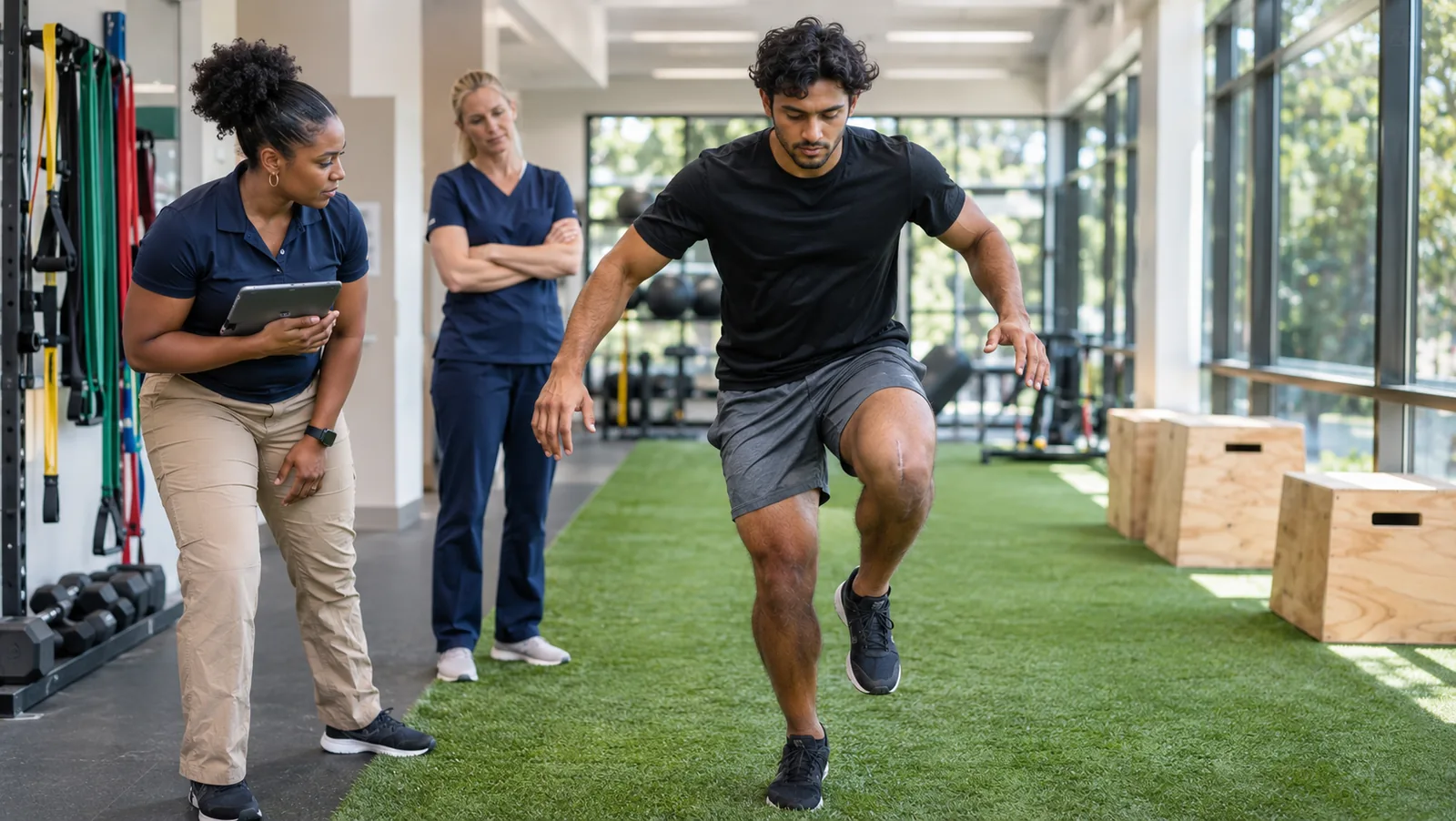
Athlete with a knee surgery scar doing a single-leg hop test on turf while a physical therapist watches
"My surgeon said six months. It's been six months. I'm going back Saturday." I hear that line all the time, and I understand it completely. But a date on a calendar has never once tested a knee.

The comeback is my favorite part of what I do. Surgery fixes the structure. Rehab rebuilds the athlete. Watching someone step back onto their court, field or platform never gets old.

It is also the moment when I get the most pushback, because by then the knee or shoulder usually feels good. Feeling good is not the same as being ready. Healing tissue, rebuilt strength, timing and confidence all come back on different schedules.

51%

lower reinjury rate for each month an athlete waited to return to sport, up to nine months after ACL reconstruction. After nine months, waiting longer added no further benefit.

In that same study, athletes who returned with quadriceps strength below 90% of their other leg were reinjured far more often: about one in three, compared with one in eight for those above it.

Why Time Alone Is Not Enough

Time matters because a new ACL graft needs months to mature inside the knee. But time is the minimum, not the finish line. Two athletes at the same month can be in very different places. One has full strength and clean landings. The other still favors the leg without realizing it. That is why I care more about what you can do than how long it has been.

The Phases of a Real Comeback

Calm it down. Control swelling, protect the repair, and get the knee fully straight early. Losing extension is one of the hardest things to win back later.

Restore motion and walking. Bend, straighten and walk without a limp before anything else gets harder.

Rebuild strength. This is the long middle, and it is where comebacks are won. The thigh and hip muscles have to come back close to the other side.

Run, jump and land. A straight line jog first, then hopping, landing and controlled changes of direction.

Train like your sport. Cutting, reacting to a defender, sprinting and stopping at game speed.

Practice before play. Full practices without limits come before competition, not after.

The Tests That Matter

  • Strength symmetry. Quadriceps and hamstring strength close to the uninjured leg, ideally measured, not guessed.
  • Hop tests. Single leg hops for distance and timing, compared side to side.
  • Movement quality. Landing and cutting with the knee over the toes, not caving inward, even when tired.
  • Sport drills. Completing practice level work without swelling or pain the next day.
  • Readiness of the mind. Questionnaires that measure confidence and fear of reinjury are part of a modern return to sport assessment.

The Part No One Sees

On average, 81% of people return to some sport after ACL reconstruction, but only 65% get back to their preinjury level and 55% to competitive sport. Physical recovery is only part of that gap. A positive psychological response was one of the factors linked to getting back to the preinjury level.

Fear of reinjury is normal, and it is not weakness. It shows up as hesitation on a cut, a habit of protecting the leg, or simply not wanting to go back. Talk about it with your surgeon and therapist. Gradual exposure to the movements you fear, in a controlled setting, is part of rehab, not an extra.

It Is Not Just the ACL

The same principles apply to almost every comeback I guide. After shoulder stabilization, overhead athletes rebuild range and strength before a staged return to throwing or hitting, as I described in my volleyball article. After Tommy John surgery, a throwing program is built over many months. After a meniscus repair, the healing tissue needs protection before deep squats and pivots, which I explain in my meniscus article. If you want to lower the odds of a first ACL tear, start with how ACL tears happen without contact and the warm-up that protects soccer knees. Criteria first, calendar second.

When You Do Need Us

At TruOrtho in San Antonio, the goal of surgery is a return plan built around your sport and your goals, with progress measured alongside your physical therapist rather than guessed at. If you are recovering from an injury or surgery and wondering whether you are ready, I am glad to help you find out. You can read more about my approach on my TruOrtho page.

Your comeback deserves a plan, not a date. Request an appointment with Dr. Lynch or call (210) 878-4116.

Questions About Coming Back

How long after ACL surgery can you play sports?
Research supports waiting at least about nine months and passing strength and hop tests before returning to cutting and pivoting sports. Your exact timing depends on your progress, not the calendar alone.

What is a return to sport test?
It is a set of measurements, usually strength testing, hop tests, movement screening and a confidence questionnaire, that compares your injured side with your healthy side. It shows whether your body is ready for the demands of your sport.

Is it normal to be afraid of getting hurt again?
Yes, and it is very common. Naming it and working on it with your care team is part of a complete recovery.

Sources

Grindem H, Snyder-Mackler L, Moksnes H, Engebretsen L, Risberg MA. Simple decision rules can reduce reinjury risk by 84% after ACL reconstruction: the Delaware-Oslo ACL cohort study. Br J Sports Med. 2016;50(13):804-808.
Ardern CL, Taylor NF, Feller JA, Webster KE. Fifty-five per cent return to competitive sport following anterior cruciate ligament reconstruction surgery: an updated systematic review and meta-analysis. Br J Sports Med. 2014;48(21):1543-1552.
Recent Posts

See All

The Comeback: Your Calendar Is Not Your Clearance

Return to sport after ACL reconstruction, or after any major injury, is not a date on a calendar. It is a set of tests your body and your mind have to pass. Here is what that looks like, and why the last few weeks matter more than people think.

Athlete with a knee surgery scar doing a single-leg hop test on turf while a physical therapist watches
"My surgeon said six months. It's been six months. I'm going back Saturday." I hear that line all the time, and I understand it completely. But a date on a calendar has never once tested a knee.

The comeback is my favorite part of what I do. Surgery fixes the structure. Rehab rebuilds the athlete. Watching someone step back onto their court, field or platform never gets old.

It is also the moment when I get the most pushback, because by then the knee or shoulder usually feels good. Feeling good is not the same as being ready. Healing tissue, rebuilt strength, timing and confidence all come back on different schedules.

51%

lower reinjury rate for each month an athlete waited to return to sport, up to nine months after ACL reconstruction. After nine months, waiting longer added no further benefit.

In that same study, athletes who returned with quadriceps strength below 90% of their other leg were reinjured far more often: about one in three, compared with one in eight for those above it.

Why Time Alone Is Not Enough

Time matters because a new ACL graft needs months to mature inside the knee. But time is the minimum, not the finish line. Two athletes at the same month can be in very different places. One has full strength and clean landings. The other still favors the leg without realizing it. That is why I care more about what you can do than how long it has been.

The Phases of a Real Comeback

Calm it down. Control swelling, protect the repair, and get the knee fully straight early. Losing extension is one of the hardest things to win back later.

Restore motion and walking. Bend, straighten and walk without a limp before anything else gets harder.

Rebuild strength. This is the long middle, and it is where comebacks are won. The thigh and hip muscles have to come back close to the other side.

Run, jump and land. A straight line jog first, then hopping, landing and controlled changes of direction.

Train like your sport. Cutting, reacting to a defender, sprinting and stopping at game speed.

Practice before play. Full practices without limits come before competition, not after.

The Tests That Matter

  • Strength symmetry. Quadriceps and hamstring strength close to the uninjured leg, ideally measured, not guessed.
  • Hop tests. Single leg hops for distance and timing, compared side to side.
  • Movement quality. Landing and cutting with the knee over the toes, not caving inward, even when tired.
  • Sport drills. Completing practice level work without swelling or pain the next day.
  • Readiness of the mind. Questionnaires that measure confidence and fear of reinjury are part of a modern return to sport assessment.

The Part No One Sees

On average, 81% of people return to some sport after ACL reconstruction, but only 65% get back to their preinjury level and 55% to competitive sport. Physical recovery is only part of that gap. A positive psychological response was one of the factors linked to getting back to the preinjury level.

Fear of reinjury is normal, and it is not weakness. It shows up as hesitation on a cut, a habit of protecting the leg, or simply not wanting to go back. Talk about it with your surgeon and therapist. Gradual exposure to the movements you fear, in a controlled setting, is part of rehab, not an extra.

It Is Not Just the ACL

The same principles apply to almost every comeback I guide. After shoulder stabilization, overhead athletes rebuild range and strength before a staged return to throwing or hitting, as I described in my volleyball article. After Tommy John surgery, a throwing program is built over many months. After a meniscus repair, the healing tissue needs protection before deep squats and pivots, which I explain in my meniscus article. If you want to lower the odds of a first ACL tear, start with how ACL tears happen without contact and the warm-up that protects soccer knees. Criteria first, calendar second.

When You Do Need Us

At TruOrtho in San Antonio, the goal of surgery is a return plan built around your sport and your goals, with progress measured alongside your physical therapist rather than guessed at. If you are recovering from an injury or surgery and wondering whether you are ready, I am glad to help you find out. You can read more about my approach on my TruOrtho page.

Your comeback deserves a plan, not a date. Request an appointment with Dr. Lynch or call (210) 878-4116.

Questions About Coming Back

How long after ACL surgery can you play sports?
Research supports waiting at least about nine months and passing strength and hop tests before returning to cutting and pivoting sports. Your exact timing depends on your progress, not the calendar alone.

What is a return to sport test?
It is a set of measurements, usually strength testing, hop tests, movement screening and a confidence questionnaire, that compares your injured side with your healthy side. It shows whether your body is ready for the demands of your sport.

Is it normal to be afraid of getting hurt again?
Yes, and it is very common. Naming it and working on it with your care team is part of a complete recovery.

Sources

Grindem H, Snyder-Mackler L, Moksnes H, Engebretsen L, Risberg MA. Simple decision rules can reduce reinjury risk by 84% after ACL reconstruction: the Delaware-Oslo ACL cohort study. Br J Sports Med. 2016;50(13):804-808.
Ardern CL, Taylor NF, Feller JA, Webster KE. Fifty-five per cent return to competitive sport following anterior cruciate ligament reconstruction surgery: an updated systematic review and meta-analysis. Br J Sports Med. 2014;48(21):1543-1552.
Recent Posts

See All